
I was a teenager when I bought a different kind of book about rock. It was not about any particular band or music scene, but was Simon Frith’s ‘ The Sociology of Rock’, which introduced me to youth culture from industry and social perspectives. As an academic, Simon was a founder member of the International Association for the Study of Popular Music and a founder editor of the journal Popular Music. As a journalist he was a member of the collective that started the British rock magazine, Let it Rock, was a columnist for the New York Village Voice, and worked as a rock critic for the Sunday Times and The Observer. He also chaired the judges of the Mercury Music prize from its beginnings in 1992 until 2016.
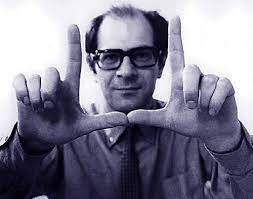
I met him in 2019, before the pandemic. It was the 70th birthday of the iconic avantgarde guitar player Fred Frith at Cafe Oto. On that occasion, Fred introduced me to his brother Simon. Because of his OBE and his Emeritus Professor in Music titles, in the beginning, I was not sure how to approach him but quite quickly, I realised his lack of formality through his relaxed way of responding to my emails. After several decades of studying the music industry and youth culture, I am sure his answers will help us to get a better understanding of our music heroes.
You studied at Oxford University in England and Berkeley in the US in the 60s. What were the main differences and similarities between the culture and attitude towards popular music among the students in both societies?
After studying Philosophy Politics and Economics at Oxford University, I moved to San Francisco, USA, in 1967 to do a PhD in Sociology at the University of California at Berkeley. I found myself in the middle of the Vietnam War and the aftermath of the Free Speech Movement. Students were so much involved in politics, it was the peak of the hippie movement and the use of drugs, but also the rise of the Black Panthers and the anti-racism movements. There were lots of discussions among people with different philosophical and political traditions. It was a more energised community than the one we get used to in Britain. It was also a great university because of the people who were teaching there.
What makes you interested in studying rock and pop culture? How was the evolution into becoming accepted by the academy seen as a serious field of research?
I became interested in studying popular music and rock culture because in Britain there were already people starting to study working class and popular culture, people who created Cultural Studies such as Stuart Hall. Also during my period in the US, I was proof-reading for an underground paper called Berkeley Barb. I met another student from Berkeley (in politics), Greil Marcus, who became the reviews editor of the newly launched Rolling Stone magazine, for which (after I returned to Britain) I started to write reviews.
What are the different angles to studying rock & pop culture?
There are different angles from which you can study rock culture, for example, from the left it was dominated by Theodor Adorno and the Frankfurt School, who saw commercialized popular culture as a tool of Capitalism, so they were very suspicious. On the other hand, some people thought that there is a positive side of popular and youth culture in everyday life, so these were the most interesting areas of argument. My position changed over the years. My starting position was, I can see popular music is a very commercial form that can cause problems, but at the same time, it is a liberating way that people can express themselves in important ways and not in establishment ways, so there is a contradiction that creates a tension that was interesting to me. That capitalist-materialistic aspect is what we need to understand, how the music industry works and what effects it has on people’s expression.
Anglo-American Pop & Rock music has been highly influential in youth culture all around the world, including third-world countries. Do you think it was used as a kind of propaganda by corporations, as was American cinema after WW2?
It is part of the history of cultural capitalism. You can say the first cultural popular form was Hollywood cinema, which influenced how people make films in different parts of the world. You could see popular music as part of cultural imperialism, with major record companies selling records to other countries, making profits, and making people listen to music in the same way that Americans do. This has a long history, popular music always has been global. You can say jazz went around the world to every country and every country has jazz bands but this did not mean that the only way to play it was like the Americans. It also meant, taking a particular form, particular freedom of improvisations and instrumentation and adapting to what the music was in that particular country. You can have jazz in Chile, Argentina or in Cuba but these jazzes were different from each other and different to American jazz.
What were the social, educational and cultural conditions in England during the 60s that made possible the British Invasion and the aftermath music styles that took over their American counterparts? How had the industry been sustaining that market position?
One of the crucial aspects of popular music is that you do not need to have a long-time classical music education. It’s not to say that it was not useful but you certainly can have the confidence to play the guitar by learning from an older brother or a friend. You can be able to make something that you felt original and interesting at a very early stage, so you do not need to go to a formal teaching system. Because it is made by young people they have to find a way to do music without the need to go to a long apprenticeship. Why were people like The Beatles confident to write their own songs? That is a tricky question because there was not much music education but there was significant art education. Art schools encouraged people to think that their individual creativity was a good thing, which was more powerful in Britain than maybe in other countries. You could have a student grant without having very strong academic qualifications. Art school was a place where the rebels went and they made music.
What are the main characteristics of British pop and rock musicians that made their music different in relation to the Americans?
Why rock music in Britain is different because it was made by different people. Skiffle and Blues became a different mix in Britain, it was odd that white British young musicians became significant in the R&B and rock period. Why were they able to place themselves in the American black music tradition? I think another key thing was the new technology. Again in Britain, there was a tension that goes back to politics, and folk ideologues maintaining that it was working-class music and that its authenticity rested in that it was acoustic, more like communities singing together. The same objections were made to Bob Dylan when he changed to an electric, amplified guitar, he ‘betrayed’ folk creation. In Britain, there was a sense that amplification was a good thing, being loud was good and playing electric guitar gave you the possibilities that the acoustic didn’t. So there was a funny mix of things, they weren’t hugely different in the elements but the elements came differently in different countries.
What is the importance of record producers such as The Beatles’ George Martin and recording studios?
George Martin enabled The Beatles to express themselves in good musical terms. He saw what they were trying to do and used his production skills, not to impose his classical training music education on the top of the Beatles. He understood what was sounding wrong so that it could be made to sound right in the studio.
Studios are not defined by the kind of music they produce, so the producers hire the studio and use their engineers, so the music which passes in a studio can be extremely varied. You meet people who are making adverts, reggae songs, pop music, so for the musicians who go to a recording studio, it is also where you hear other sorts of ideas so it is a creative place not just for the individual but because of the network of people that are working there.
To understand the history of popular, pop & rock music from the beginning of the XX century until now, we need to divide it into periods. What are the main periods according to different angles? What would be these milestones and why?
You can look at the significant forces that perfect things, the facts of things. One is changing technology, the possibilities of how people make and listen to music, that has an effect on the aesthetic and how music commerce works. Records took over sheet music as the basis of how you make money, and sheet music depends on written music and what the people perform, while records catch something very unique so that you couldn’t score some of the sounds or some of the voices, so sound recordings developed jazz music, and also rock depends on technology and amplification. Another crucial element is migration, how people move in and out of countries and influence each other musically. It is a significant reflection of wars and conflicts and the effects of those on cultural movements. In Britain, we do not have dramatic civil war effects but we have major effects of migration and racism, which have affected the sort of music people could hear and make. I would be less happy to say, this is a key record, after this record everything changed. I am far more interested in long music history, simultaneously there is change and not change. If you go back to the XIX century to a pub in London, the music won’t be completely different, it would be technologically different but it wouldn’t be hugely different musically from the one you might hear in a pub in London today. You can see the history in the present, I don’t think there are revolutionary changes.
Now it is very fashionable in the media industry to use William Strauss and Neil Howe’s generational divisions, such as baby boomers, gen X, Y, Millennials and today’s gen Alpha. Do you agree with those divisions?
I do not agree with that generation theory, because generations are not neat. People are born every day. Generation Z- when it will start and finish? It is random, obviously. People have similar generation experiences, but to generalise across all age groups and to say they are all the same is obviously ridiculous. There are different classes, race differences, and power differences, and those things don’t go away. For people who hear music on the radio of course the sounds five years before or five years later are different, but how significant this is, you can’t generalise.
Are independent record labels and artists still the key to producing changes in the music market?
I think the logic of Capitalism doesn’t change, it maximises the returns from a particular investment and it also wants to manage risk, so that is the standard model. The people want that so we do more of it. That is how the fashion industry works until a ‘new thing’ becomes very popular, and everything starts to sound the same and then something (a new ‘new thing’) does not sound the same, so that became popular in its turn.
You talked about subcultures. How you can define them?
Subcultures are partly marketing. If you want to sell things you need a label for them, so you can distinguish them when you go to a record shop. I was always interested in seeing into what category Fred Frith’s music came in shop racks: avant-garde, jazz, classical, rock? It seems kind of random. Being a consumer or fan in certain circumstances, people identify with the band and the music they make and they go to gigs to listen to music they like, so the subculture label is helpful for the general audience. It is not so helpful with, say, dance music. You need to be an expert to distinguish what sort of record is different from another.
Rock and pop icons help to create a cultural identity. In the past, we had lots of them such as Elvis Presley, John Lennon, Sid Vicious, Kurt Cobain, and Amy Winehouse. Are they disappearing or has the industry changed its marketing strategy to sell its products?
Big American acts such as Lady Gaga, Beyonce or Taylor Swift fill stadiums. We still have iconic artists because they have such a huge audience that record companies don’t need to do much, just release a record and everybody feels that they need to listen to it.
Do you think that the ideas represented by old icons such as Bob Dylan or Sid Vicious are similar to Taylor Swift or Beyonce which are closer to celebrities’ culture and the fashion industry?
We cannot say that the industry creates these icons. It varies from act to act, but even if they were created to some extent by the industry, they seize control of their music. This is how stardom works. If you are a big name one of the aspects of being a big star is you get a lot of attention. If you get a record out, every media involved is going to review it, raising attention to it. I am not sure if that is an ideological position. It is like saying that rock is not about selling records or marketing, and pop is. In terms of what they are doing musically, there is no particular reason to assume that Taylor Swift is more or less interesting than Bob Dylan. They are making different sorts of music, and they have different sorts of purposes but you cannot say one is commercial and one isn’t.
Your brother Fred Frith, among many other artists, is part of a subculture which could be branded as avantgarde, improvised, experimental music. What is the value of experimental music in the Art World? What is the importance of these musicians and what made them “different” to the rest?
It is very interesting, the same as jazz. There are always people who are operating different musical worlds or don’t accept the labels. Their interest in music is not individualistic but is saying we do not want to be standardised, our music is not about finding a formula and then following it, our music is something different. You can say most people go to a gig because they know what the person is going to play and they like it. It is a different sort of audience that goes to a gig with no idea if you are going to like it or not. So this is a world where experimental artists have an audience which can be big enough to make a living, not like a star’s audience. It is always interesting to see how that sort of audience is found, what sort of places that music can flourish in New York or San Francisco in certain periods or whatever. Sometimes those movements are very political. It is a political sense like Rock in Opposition, certainly, avantgarde jazz was tied to Black Power movements but it doesn’t have to be political, it can be like looking at art movements, avantgarde movements that sometimes are political but they don’t have to be, can be useful sometimes or can be a hindrance because as the world changes politics have to change.
Do people who listen to that sort of music or attend those kinds of gigs, have a different profile than the ones who listen to more commercial music?
We need to talk to listeners. Some people think want to listen to music, but are not so interested in the musician. On the other hand, there were certainly early Bob Dylan fans who were obsessed with what sort of person Bob Dylan was, and if they would like him or not. In fact, over the time, you could say that Bob Dylan in himself is not very interesting, what is interesting is the musical aspect, the music he does and the connections he makes. People do not know Bob Dylan better, because they find the music he makes interesting. I reckon it is the same with the avantgarde or experimental artists, people go because they want a musical experience rather than because they want to have insight into the character of the person playing music because that is not quite how that world works. As an aside, it is interesting how many classical music books are about composers and their wives!
Have popular women musicians transcended their value beyond sex, fashion or celebrity icons? Or even on the opposite side as a feminist or political activist to be considered a musician or artist, such as The Beatles, Pink Floyd, or David Bowie?
All musical forms have specific sexist ways of working, certain assumptions about what are their places on the stage or whatever but also most of the music world has quite different opportunities which are gender-based, who is going to play what instrument, who is employed and so on. In the history of pop music only women have a female voice, music needs a female voice, so women have the role of singing. In pop singing terms women have always been significant, with famously important female singers. In jazz, there are many female singers but other instruments are classified to be male, so it seems (or is assumed) that only a man can play the electric guitar. These ideologies and possibilities continue. Even now the most famous studio producers or DJs are men, even though there is no musical or technological reason why it should be different, why it is harder to become a famous female DJ than a famous male DJ. The notion of ‘expertise’, in this as in other worlds is ideological. This sexual model is deeply embedded in the music-making world. I think the avantgarde is interesting because there is a more acknowledged history of women in avantgarde than in mainstream rock and maybe that is because there is a sense of experimental openness that counteracts some sexist assumptions.
The experience of listening to music has changed, from live gigs, vinyl, CDs and videos to streaming platforms such as Spotify or YouTube and virtual concerts such as ABBA Voyage. How does the music experience change the relationship between the listener and the music? What is the situation now and what could be the future of the music industry in terms of products, listeners, buyers, experience and meaning?
From a musician’s point of view, the changes are not as big as they look. Most musicians made a living playing live rather than selling records or having copyrights. Therefore live music continues or maybe has flourished more because of all the things that are happening. Musicians always have been exploited by the record industry, so digitisation as such did not stop musicians from getting the income that they used to have. It does not work like that. Because live music become more significant there are big conglomerates like Live Nation, who control promotions, clubs and festivals, which are perhaps the most significant form in the live music economy. Festivals became very formulated in the calculated way that they are selling the same sort of things, but on the other hand, leaving the market for smaller gatherings which are more intimate and local. For me, the more interesting thing is the effects digital has had on listeners. In my generation finding music that you like was always a kind of quest, to go to records shops after friends told you about things and then see people who didn’t know anything about it, it was a sort of adventure. These days, because of Spotify and anything else, no one has to do anything like that, they can find anything they want instantly, and algorithms are trying to work out what you like. It becomes harder for musicians whose music isn’t formulaic to find an audience, to work out how people find new music, I think people will because people won’t be satisfied listening to the same sort of things all the time. That is the sort of pressure that was always from commerce, which is now more precise and encourages the industry to believe that computers can provide the winning formulas, that we will buy records produced by computers, as they can look at what it is that listeners like, to analyse and create a new record that does exactly the same thing. But I don’t think digital commerce will, in the end, ever be able to determine what we listen to anymore than analogue commerce could.
Selected bibliography:
Simon Frith, The Sociology of Rock, London, 1978: Constable and Company, Limited.
Simon Frith and Andrew Goodwin, On Record: rock, pop and written word, London, 1990: Routledge.
Simon Frith, Performing Rites, Oxford, 1996. Oxford University Press.
Simon Frith, Matt Brennan, Martin Cloonan, Emma Webster, The History of Live Music in Britain from Live Aid to Live Nation, Volume III, 1985-2015, London, 2023. Routledge. Also see Volume I from Dance Hall to the 100 Club, 1950-1967; and Volume II from Hyde Park to the Hacienda, 1968-1984.
Currently, he co-edits with Martin Cloonan and John Williamson called Made in Scotland presently in production. For more information visit: http://livemusicexchange.org/
Any questions or comments are welcome.



 Magik Circles